Lower stamp duty on 99-year society leases: renter impact
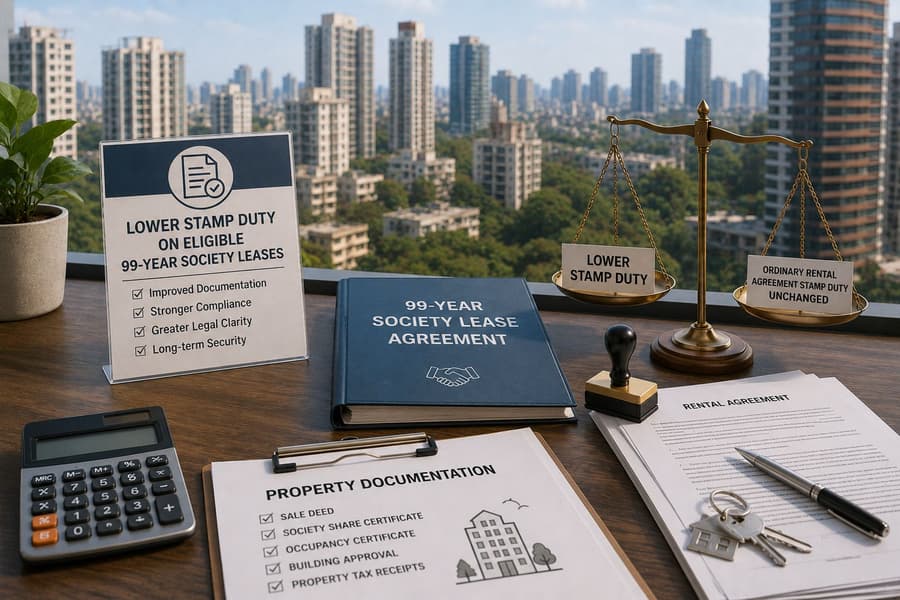
Maharashtra has cut stamp duty on the registration of eligible 99-year residential leases for housing societies. This can help societies finish long-pending paperwork at a lower cost.
What the cut does not cover
Tenants and landlords should be clear on the limits. Certain long-term lease arrangements involving housing societies are what the concession is about. For an ordinary residential leave-and-licence rental agreement, the stamp duty and registration steps are not automatically altered by it.
An indirect gain for rentals
For the rental market the benefit is indirect. Records, building decisions and future redevelopment may be easier to manage for a society whose lease documentation is clearer. Over time, that can make the residential setting more orderly for owners and tenants.
A landlord who is selling, transferring or seeking finance against a property can draw confidence from sound society documentation. For tenants, the rental agreement in hand still needs its own check. Look at the rent, deposit, term, notice period and society rules.
Who may benefit most
The change could matter most in older leasehold societies where high registration costs have held up formalisation. Committees and members may be nudged to complete the process by the lower costs.
Do not assume the issue is settled
Neither tenants nor owners should take it for granted that a society's lease position is resolved because of the new rate. Verifying the property documents, eligibility conditions and registration requirements remains necessary.
The real value is practical. Eligible societies may find it easier to complete key long-term documents, and there may be less doubt about their land arrangements.
